
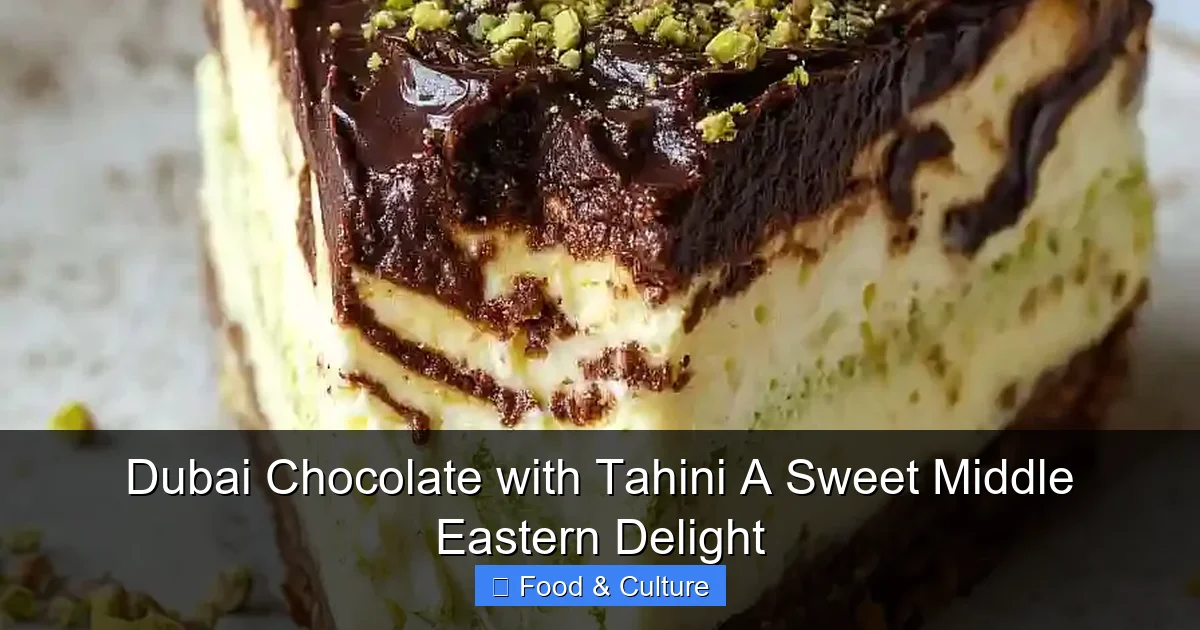
Dubai chocolate with tahini is a luxurious fusion dessert that combines rich, velvety chocolate with the nutty, slightly bitter depth of tahini. This modern Middle Eastern delicacy has taken the gourmet world by storm, offering a sophisticated twist on traditional sweets with its creamy texture and bold flavor profile.
If you’ve ever wandered through the glittering souks of Dubai or dined at a chic Middle Eastern café, chances are you’ve encountered a dessert that stops you in your tracks—Dubai chocolate with tahini. It’s not just sweet; it’s an experience. Imagine biting into a silky, dark chocolate shell that gives way to a luscious, nutty center that’s both creamy and slightly savory. That’s the magic of tahini—a humble sesame paste transformed into a luxurious ingredient that elevates chocolate to new heights.
This isn’t your average chocolate bar. It’s a cultural crossover, a modern interpretation of ancient flavors, and a testament to the creativity of Middle Eastern confectioners. While chocolate has long been a global favorite, the addition of tahini brings a distinctly regional flair that’s both surprising and deeply satisfying. Whether you’re a foodie, a traveler, or someone who simply loves trying new flavors, Dubai chocolate with tahini is a treat worth exploring.
Contents
- 1 Key Takeaways
- 2 Quick Answers to Common Questions
- 3 📑 Table of Contents
- 4 The Origins of Dubai Chocolate with Tahini
- 5 What Makes Tahini the Perfect Chocolate Companion?
- 6 How Dubai Chocolate with Tahini Is Made
- 7 Where to Find Dubai Chocolate with Tahini
- 8 The Cultural Significance of Tahini in Middle Eastern Desserts
- 9 Why Dubai Chocolate with Tahini Is Trending Globally
- 10 Health Benefits and Considerations
- 11 Conclusion
- 12 Frequently Asked Questions
Key Takeaways
- Unique Flavor Fusion: Dubai chocolate with tahini blends the sweetness of premium chocolate with the earthy, nutty taste of sesame paste, creating a complex and satisfying flavor.
- Rich Cultural Roots: Inspired by traditional Middle Eastern desserts like halva and kanafeh, this chocolate reflects the region’s love for bold, aromatic ingredients.
- Premium Ingredients: High-quality dark chocolate, raw tahini, and often a hint of cardamom or orange blossom elevate this treat to gourmet status.
- Texture Perfection: The smooth, creamy consistency comes from carefully emulsified tahini and melted chocolate, often enhanced with butter or cream.
- Growing Popularity: From Dubai’s luxury patisseries to global food trends, this chocolate is becoming a must-try for adventurous dessert lovers.
- Versatile Serving Options: Enjoy it as a bar, truffle, or spread—pair it with coffee, fruit, or even use it in baking.
- Homemade Potential: With simple tools and ingredients, you can recreate this decadent treat at home with impressive results.
Quick Answers to Common Questions
What is Dubai chocolate with tahini?
It’s a luxurious dessert that combines rich chocolate with creamy tahini, creating a unique blend of sweet and nutty flavors inspired by Middle Eastern cuisine.
Is tahini the same as peanut butter?
No, tahini is made from ground sesame seeds, while peanut butter comes from peanuts. Tahini has a more earthy, slightly bitter taste compared to the sweetness of peanut butter.
Can I make Dubai chocolate with tahini at home?
Absolutely! With melted chocolate, tahini, and a few optional add-ins like spices or cream, you can create a delicious version at home using simple kitchen tools.
Where can I buy Dubai chocolate with tahini?
Look for it in specialty chocolate shops, Middle Eastern grocery stores, or online retailers like Mirzam, Patchi, or Kahk.
Is Dubai chocolate with tahini vegan?
It can be, if made with dairy-free chocolate and no butter. Always check the ingredients to ensure it meets your dietary needs.
📑 Table of Contents
- The Origins of Dubai Chocolate with Tahini
- What Makes Tahini the Perfect Chocolate Companion?
- How Dubai Chocolate with Tahini Is Made
- Where to Find Dubai Chocolate with Tahini
- The Cultural Significance of Tahini in Middle Eastern Desserts
- Why Dubai Chocolate with Tahini Is Trending Globally
- Health Benefits and Considerations
- Conclusion
The Origins of Dubai Chocolate with Tahini
To truly appreciate Dubai chocolate with tahini, it helps to understand where it comes from. While chocolate itself has European and Mesoamerican roots, the fusion with tahini is a distinctly Middle Eastern innovation. Dubai, as a global crossroads of cultures, has become a hotspot for culinary experimentation. Here, chefs and home bakers alike draw inspiration from centuries-old traditions while embracing modern techniques and global influences.
Tahini, made from ground sesame seeds, has been a staple in Middle Eastern cuisine for thousands of years. It’s used in everything from hummus to halva, and its rich, nutty flavor pairs surprisingly well with sweet ingredients. In traditional desserts, tahini is often combined with honey, sugar, or dates to create dense, energy-rich sweets. The idea of blending it with chocolate likely emerged from this tradition—taking a familiar ingredient and reimagining it in a new context.
Dubai’s luxury food scene has played a major role in popularizing this combination. High-end patisseries and chocolatiers in the city began experimenting with tahini-infused chocolates as a way to stand out in a competitive market. The result? A product that’s both exotic and comforting, familiar yet novel. Today, you can find Dubai chocolate with tahini in specialty shops across the UAE, as well as in gourmet stores in Europe, North America, and beyond.
A Modern Twist on Ancient Flavors
What makes Dubai chocolate with tahini so special is its ability to bridge the past and present. While tahini has ancient roots, its use in chocolate is a contemporary innovation. This fusion reflects the broader trend of “modern Middle Eastern cuisine,” which honors tradition while embracing creativity.
For example, some versions of this chocolate include spices like cardamom or saffron—ingredients commonly found in Arabic coffee and desserts. Others incorporate orange blossom water or rosewater, adding floral notes that complement the nuttiness of tahini. These additions aren’t just for flavor; they’re a nod to the region’s rich culinary heritage.
Moreover, the texture of Dubai chocolate with tahini often mimics that of traditional Middle Eastern sweets. Think of the soft, fudgy consistency of halva or the creamy layers of kanafeh. By replicating these textures in a chocolate format, creators offer a familiar sensory experience in a completely new form.
What Makes Tahini the Perfect Chocolate Companion?

Visual guide about Dubai Chocolate with Tahini A Sweet Middle Eastern Delight
Image source: optimalrecipes.com
At first glance, tahini and chocolate might seem like an unlikely pair. One is nutty and slightly bitter; the other is sweet and rich. But when balanced correctly, they create a harmony that’s greater than the sum of its parts. So why does tahini work so well with chocolate?
First, tahini adds depth. While chocolate can sometimes be one-dimensional in flavor, tahini introduces a savory, umami-like quality that enhances complexity. This contrast prevents the dessert from becoming overly sweet, making each bite more interesting and satisfying.
Second, tahini contributes a creamy, almost buttery texture. When properly emulsified with melted chocolate, it creates a smooth, velvety filling that melts in your mouth. This texture is especially appealing in truffles or layered bars, where the contrast between the crisp chocolate shell and the soft center is part of the appeal.
Third, tahini is rich in healthy fats and protein, which can help slow the absorption of sugar. While Dubai chocolate with tahini is still a treat, it’s slightly more balanced than traditional chocolate desserts. This makes it a slightly more guilt-free indulgence—especially when made with dark chocolate and minimal added sugar.
The Science of Flavor Pairing
Food scientists and chefs often talk about “flavor pairing”—the idea that certain ingredients complement each other because they share similar chemical compounds. In the case of chocolate and tahini, both contain compounds like vanillin and pyrazines, which contribute to their rich, roasted flavors. This shared chemistry helps them blend seamlessly.
Additionally, the slight bitterness of tahini can counteract the sweetness of chocolate, creating a more balanced taste. This is similar to how a pinch of salt enhances sweetness in baking. The result is a dessert that’s indulgent without being cloying.
Some artisans even toast the sesame seeds before grinding them into tahini, which deepens the nutty flavor and adds a smoky note that pairs beautifully with dark chocolate. This small step can make a big difference in the final product.
How Dubai Chocolate with Tahini Is Made

Visual guide about Dubai Chocolate with Tahini A Sweet Middle Eastern Delight
Image source: beamrecipes.com
Making Dubai chocolate with tahini at home is easier than you might think—especially if you have a few key ingredients and a little patience. While professional chocolatiers use specialized equipment, home cooks can achieve impressive results with basic tools.
The process typically starts with melting high-quality chocolate. Dark chocolate (70% cacao or higher) works best, as its intensity stands up to the bold flavor of tahini. Some recipes call for a blend of dark and milk chocolate to soften the bitterness, but purists often prefer the depth of pure dark chocolate.
Next, tahini is gently warmed and mixed with the melted chocolate. The key here is to avoid overheating, as tahini can separate if it gets too hot. A double boiler or microwave in short bursts helps maintain a smooth, creamy consistency.
Many recipes include additional ingredients to enhance flavor and texture. Butter or heavy cream is often added to make the mixture richer and more velvety. A pinch of salt balances the sweetness, while spices like cardamom or cinnamon add warmth. Some versions include a touch of honey or maple syrup for extra sweetness, though this is optional.
Once the mixture is smooth, it’s poured into molds or spread into a baking dish to set. After chilling for a few hours, the chocolate is ready to enjoy. Some people prefer to coat the bars in cocoa powder, crushed pistachios, or edible gold leaf for a luxurious finish.
Tips for Perfect Homemade Dubai Chocolate
- Use high-quality tahini: Look for raw, unprocessed tahini with a smooth, pourable consistency. Avoid brands with added sugar or preservatives.
- Temper your chocolate: If you want a shiny, snap-able finish, temper the chocolate before mixing. This involves heating and cooling it to specific temperatures.
- Don’t overmix: Once the chocolate and tahini are combined, stir gently to avoid incorporating too much air, which can make the texture grainy.
- Chill thoroughly: Allow the chocolate to set in the refrigerator for at least 2–3 hours before cutting or serving.
- Experiment with add-ins: Try adding toasted sesame seeds, orange zest, or a splash of rosewater for extra flavor.
Where to Find Dubai Chocolate with Tahini

Visual guide about Dubai Chocolate with Tahini A Sweet Middle Eastern Delight
Image source: i5.walmartimages.com
If you’re not ready to make it yourself, you can find Dubai chocolate with tahini in a variety of places—especially if you’re in or near the Middle East. In Dubai itself, luxury hotels and boutique patisseries often feature it on their dessert menus. Brands like Mirzam, a local chocolate maker known for its Emirati-inspired flavors, have gained international acclaim for their tahini-infused creations.
Outside the UAE, the treat is increasingly available in specialty food stores and online retailers. Look for gourmet chocolate brands that focus on Middle Eastern or fusion flavors. Some popular options include:
– Mirzam (Dubai): Known for their handcrafted chocolates with local spices and ingredients.
– Patchi (Global): A luxury chocolatier with locations worldwide, offering limited-edition tahini chocolate bars.
– Kahk (Online): An e-commerce brand specializing in modern Middle Eastern desserts, including tahini chocolate truffles.
You can also find Dubai chocolate with tahini at international food festivals, pop-up markets, and cultural events. As global interest in Middle Eastern cuisine grows, more retailers are stocking these unique treats.
Pairing Suggestions
Dubai chocolate with tahini pairs beautifully with a range of beverages and foods. Here are a few ideas:
– Coffee: The nuttiness of tahini complements the roasted notes of espresso or Turkish coffee.
– Tea: Try it with mint tea or spiced chai for a cozy, aromatic experience.
– Fresh fruit: Sliced figs, dates, or pomegranate seeds add a natural sweetness and texture contrast.
– Nuts: Toasted almonds or pistachios enhance the nutty profile.
– Cheese: Surprisingly, a mild goat cheese or creamy brie can balance the richness of the chocolate.
The Cultural Significance of Tahini in Middle Eastern Desserts
To understand why tahini is such a natural fit in chocolate, it helps to look at its role in traditional Middle Eastern sweets. Tahini has been used for centuries in desserts like halva, a dense, crumbly confection made from sesame paste and sugar. Halva is often flavored with vanilla, cocoa, or nuts and is a staple at celebrations and religious holidays.
Another classic is “ashta” or clotted cream, which is sometimes mixed with tahini and used as a filling in pastries like knafeh. The combination of creamy, nutty, and sweet is deeply rooted in the region’s culinary identity.
Dubai chocolate with tahini can be seen as a modern evolution of these traditions. It takes the essence of halva—rich, nutty, and slightly grainy—and transforms it into a smooth, chocolate-coated delight. This innovation reflects the adaptability of Middle Eastern cuisine, which has always embraced new ingredients and techniques while staying true to its roots.
Tahini Beyond Dessert
While tahini shines in sweets, it’s also a versatile ingredient in savory dishes. From hummus to baba ghanoush, it adds creaminess and depth to dips and spreads. Some chefs are even experimenting with tahini in savory chocolate dishes, like mole-inspired sauces or chocolate-dipped falafel (yes, really!).
This versatility makes tahini a favorite among chefs and home cooks alike. Its ability to bridge sweet and savory opens up endless possibilities for creative cooking.
Why Dubai Chocolate with Tahini Is Trending Globally
In recent years, Dubai chocolate with tahini has gained a cult following on social media, with food bloggers and influencers raving about its unique flavor. Platforms like Instagram and TikTok have helped spread the word, with videos of the chocolate being unwrapped, bitten into, and paired with coffee going viral.
Part of its appeal lies in its exoticism. For many Western consumers, tahini is still a relatively unfamiliar ingredient. The idea of combining it with chocolate feels adventurous and sophisticated. At the same time, the treat’s luxurious presentation—often wrapped in gold foil or presented in elegant boxes—adds to its allure.
Moreover, the rise of “global fusion” cuisine has created a demand for dishes that blend cultural traditions. Dubai chocolate with tahini fits perfectly into this trend, offering a taste of the Middle East with a modern twist.
The Role of Social Media
Social media has played a huge role in popularizing Dubai chocolate with tahini. Food influencers often highlight the chocolate’s rich color, smooth texture, and unexpected flavor. Hashtags like #TahiniChocolate and #DubaiDesserts have thousands of posts, helping to build a community of fans.
Some brands have even launched limited-edition flavors or collaborations with chefs to generate buzz. For example, a Dubai-based chocolatier might release a “Ramadan Edition” bar with saffron and pistachios, creating excitement among followers.
Health Benefits and Considerations
While Dubai chocolate with tahini is a treat, it does offer some nutritional benefits—especially when made with high-quality ingredients.
Tahini is rich in healthy fats, protein, and essential minerals like calcium, iron, and magnesium. It’s also a good source of vitamin E and B vitamins. When combined with dark chocolate, which contains antioxidants and flavonoids, the result is a dessert that’s slightly more nutritious than standard chocolate confections.
That said, it’s still high in calories and fat, so moderation is key. A small serving—say, one or two squares—is plenty to satisfy your sweet tooth without overindulging.
Allergen Information
It’s important to note that tahini is made from sesame seeds, which are a common allergen. Anyone with a sesame allergy should avoid this chocolate. Additionally, many versions contain dairy (from chocolate or added butter), so vegans should look for plant-based alternatives.
Always check the ingredient list if you have dietary restrictions.
Conclusion
Dubai chocolate with tahini is more than just a dessert—it’s a celebration of flavor, culture, and innovation. By blending the rich tradition of Middle Eastern sweets with the global love for chocolate, this treat offers a unique experience that’s both familiar and exciting.
Whether you’re enjoying it in a Dubai café, ordering it online, or making it at home, one thing is certain: once you try it, you’ll understand why it’s become such a sensation. So go ahead, take a bite, and savor the sweet, nutty magic of this modern Middle Eastern delight.
Frequently Asked Questions
What does tahini taste like?
Tahini has a rich, nutty flavor with a slightly bitter edge. It’s creamy and smooth, similar to peanut butter but with a more earthy, toasted sesame taste.
Why is tahini used in chocolate?
Tahini adds depth, creaminess, and a savory contrast to sweet chocolate. Its nutty flavor enhances the complexity of the dessert without overpowering it.
Can I substitute tahini in recipes?
While tahini has a unique flavor, you can sometimes substitute it with almond butter or sunflower seed butter, though the taste will be different.
How long does Dubai chocolate with tahini last?
When stored in an airtight container in the refrigerator, it can last up to 2 weeks. For longer storage, freeze it for up to 3 months.
Is Dubai chocolate with tahini spicy?
Not typically. Some versions include warm spices like cardamom, but it’s not spicy in the hot or peppery sense.
What’s the best way to serve Dubai chocolate with tahini?
Enjoy it at room temperature for the best texture. Pair it with coffee, tea, or fresh fruit for a complete dessert experience.
