

Planning a trip to the UAE? Knowing the latest Covid travel requirements can save you from last-minute surprises and help you breeze through your journey.
Whether you’re traveling from the US, India, or anywhere else, understanding what documents, tests, or vaccinations you need is crucial. This guide breaks down everything you must know to enter the UAE smoothly and enjoy your stay without stress. Keep reading to get clear, up-to-date information so your travel plans stay on track and hassle-free.

Credit: www.arabnews.com
Contents
Entry Tests And Screening
Entry tests and screening remain important for travelers heading to the UAE. These measures help reduce the spread of Covid-19. Each traveler must follow specific rules based on their travel plans. Below is a clear guide on what tests and screenings you may need.
Pcr Test Requirements
Most travelers to the UAE must present a negative PCR test. The test should be taken within 48 to 72 hours before departure. This timing depends on the airline and destination within the UAE. The PCR test detects the virus even in early stages. Without a valid PCR test, some travelers may be denied boarding.
Rapid Antigen Test Rules
Rapid antigen tests are accepted in some cases. These tests provide quicker results than PCR tests. They are often allowed for travelers from countries with low infection rates. The test must be done within 24 hours before flight departure. Travelers should confirm acceptance of antigen tests with their airline.
On-arrival Testing Policies
Some passengers must take a Covid test upon arrival in the UAE. This depends on the traveler’s country of origin and vaccination status. Testing on arrival helps catch cases missed before travel. Travelers may need to wait for results before leaving the airport. Follow all instructions from health officials at entry points.

Credit: travelprnews.com
Vaccination Rules
The UAE has clear vaccination rules for travelers. These rules help keep everyone safe and reduce the spread of Covid-19. Understanding these rules is important before planning your trip. The country accepts certain vaccines and requires proof of vaccination. Some travelers may have exemptions depending on their situation. Below is a detailed guide on vaccination rules for entering the UAE.
Accepted Vaccines
The UAE accepts vaccines approved by its health authorities. These include Pfizer, Moderna, AstraZeneca, and Sinopharm. Johnson & Johnson vaccine is also accepted. Travelers vaccinated with these vaccines can enter without extra testing. Vaccines not approved by the UAE may require additional tests or quarantine.
Vaccination Proof And Qr Codes
Travelers must show valid vaccination proof upon arrival. The proof should include a QR code for easy verification. UAE health authorities scan this QR code to confirm vaccine authenticity. Digital or paper certificates are both accepted. Make sure your vaccination certificate has your full name, vaccine type, and date of doses.
Exemptions And Special Cases
Some travelers may be exempt from vaccination rules. Children under a certain age usually do not need vaccination proof. People with medical conditions may get exemptions after submitting a doctor’s note. Travelers from countries with low vaccine availability might face different rules. Always check with UAE authorities before traveling if you think you qualify for an exemption.
Visa And Passport Guidelines
Understanding visa and passport guidelines is vital before traveling to the UAE. These rules ensure smooth entry and avoid last-minute issues. Travelers must know the exact requirements related to visas and passports. This section breaks down key information for easy preparation.
Visa Application Process
Visitors may need a visa depending on their nationality. Many travelers can apply online for an e-visa. The process usually involves submitting documents and paying fees. Approval times vary but often take a few days. Some nationalities get visa on arrival, simplifying entry. Always check the latest rules before booking your flight.
Passport Validity Criteria
The UAE requires passports to be valid for at least six months. This rule applies from the date of entry. Passports with less than six months’ validity may cause denial at the border. Ensure your passport is in good condition and has blank pages. Renew your passport early if it is close to expiration.
Travel Documents Needed
Besides a visa and passport, travelers must carry other documents. These include return or onward tickets and hotel bookings. Health documents may also be required due to Covid regulations. Proof of vaccination or negative test results can be necessary. Keep all documents handy during travel and immigration checks.
Quarantine And Isolation
Quarantine and isolation remain key measures in controlling Covid-19 spread in the UAE. These rules protect travelers and residents alike. Understanding these protocols helps ensure safe travel and compliance.
Quarantine Requirements
Travelers entering the UAE may need to quarantine based on their vaccination status and test results. Unvaccinated visitors usually face a mandatory quarantine period. Fully vaccinated travelers might bypass quarantine with a negative PCR test. The quarantine length varies depending on the origin country’s risk level.
Isolation Protocols For Positive Cases
Anyone testing positive for Covid-19 in the UAE must isolate immediately. Isolation prevents the virus from spreading to others. The health authorities set isolation duration based on symptom severity and test outcomes. Regular health checks monitor the patient’s condition during isolation.
Hotel And Home Quarantine Options
The UAE offers both hotel and home quarantine for eligible travelers. Hotels approved by the government provide safe quarantine environments. Travelers may choose home quarantine if they meet strict criteria, such as living alone. Health authorities conduct follow-ups to ensure compliance and safety.
Rules For Different Travelers
The UAE has specific COVID-19 travel rules based on traveler nationality and purpose. These rules help keep everyone safe while ensuring smooth travel. Understanding the requirements is crucial before planning your trip. The guidelines vary for US citizens, Indian travelers, and transit passengers. Follow the rules to avoid delays or issues at the airport.
Us Citizens
US citizens do not face strict COVID-19 entry restrictions to the UAE. No pre-travel COVID test is required if fully vaccinated. Travelers must show proof of vaccination upon arrival. Unvaccinated travelers may need to present a negative PCR test taken within 48 hours before departure. Mask-wearing is recommended in crowded places. Travelers should monitor updates as rules can change.
Indian Travelers
Indian travelers must show a negative PCR test before departure. The test should be done within 48 hours of the flight. Fully vaccinated travelers may need to present their vaccination certificates. Quarantine is generally not required for vaccinated travelers. Unvaccinated passengers may face quarantine or additional testing. Checking airline and UAE government guidelines before travel is essential.
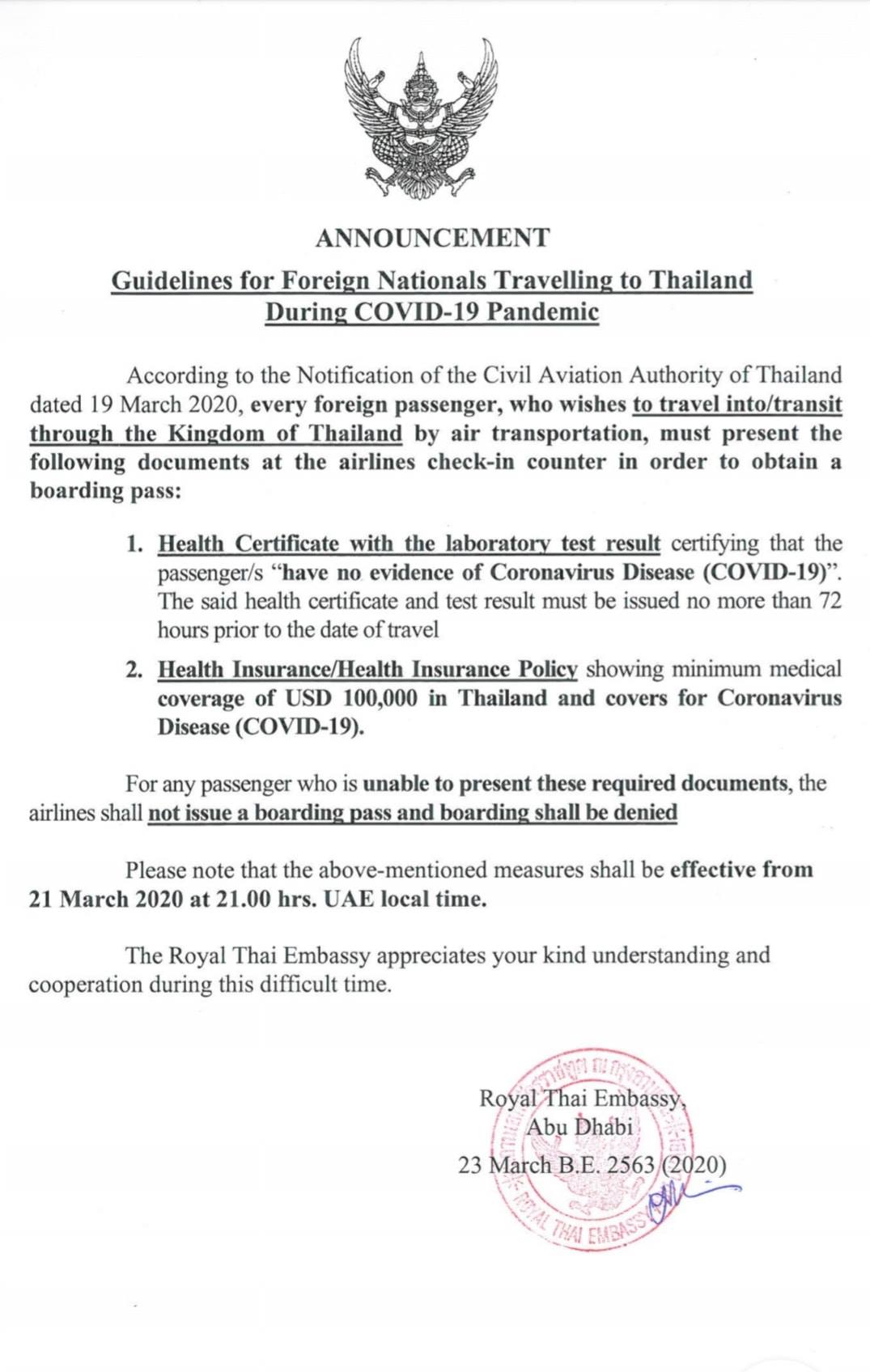
Transit Passengers
Transit passengers through UAE airports have fewer restrictions. No COVID test is required if the layover is under 24 hours. Passengers must stay within the transit area and not pass through immigration. If leaving the airport, travelers must follow entry rules based on their nationality. Airlines provide updated transit information to avoid confusion. Always confirm with your airline before traveling.
Credit: abudhabi.thaiembassy.org
Updates On Travel Restrictions
Travel restrictions to the UAE change regularly due to Covid-19. Staying informed about the latest rules helps travelers plan better. This section covers recent updates on entry rules, flight operations, and government announcements.
Country-specific Entry Rules
The UAE sets different entry rules for travelers based on their origin country. Some countries require a negative PCR test before departure. Others may ask for proof of vaccination or quarantine upon arrival. Travelers from high-risk areas face stricter checks. Check the UAE’s official list before booking your trip.
Changes In Flight Operations
Airlines adjust their flight schedules according to health policies. Some routes resume fully, while others remain limited. Flight cancellations and delays are possible due to changing restrictions. Passengers must confirm their flight status before traveling. Airports in the UAE enforce health screenings for all arrivals and departures.
Latest Government Announcements
The UAE government updates travel rules to keep people safe. Recent announcements include easing quarantine for vaccinated travelers. New guidelines for testing and health declarations are introduced often. Travelers should monitor official UAE government websites for accurate information. Following these updates ensures smooth entry and exit processes.
Health And Safety Measures
Health and safety remain a top priority for travelers to the UAE. The country has set clear measures to protect everyone. These rules aim to reduce the risk of COVID-19 spread in public spaces. Understanding these measures helps visitors stay safe and enjoy their trip.
Mask Mandates
Wearing masks is mandatory in many indoor public areas. Airports, malls, and public transport require masks. Masks must cover both nose and mouth properly. Some outdoor areas may also require masks if crowded. Travelers should carry masks at all times for compliance.
Social Distancing Rules
The UAE enforces social distancing to limit close contact. People should keep at least one meter apart. Markings and signs guide visitors in queues and seating areas. Social distancing reduces the chance of virus transmission. It is important to follow these rules strictly.
Sanitization Protocols
Regular sanitization of public places is standard practice. Hand sanitizers are available at entrances and common spots. Surfaces like counters and handrails are cleaned frequently. Travelers should use sanitizer often, especially after touching surfaces. Good hygiene supports the overall safety effort.
Resources For Travelers
Traveling to the UAE during the Covid era requires careful planning. Reliable resources help travelers stay updated on rules and safety measures. These resources offer verified information and support services. They ensure a smooth and safe journey for all visitors.
Official Websites
Official websites provide the latest Covid travel rules for the UAE. The UAE Ministry of Health and Prevention updates travel advisories regularly. Emirates Airlines and Dubai Airports also list entry requirements and testing rules. Visitors can check visa policies and health guidelines here. These sites are the best source for accurate, current information.
Emergency Contacts
Knowing emergency contacts is crucial during travel. The UAE has dedicated hotlines for Covid-related health emergencies. The Ministry of Health helpline assists with testing and quarantine queries. Local hospitals and clinics offer 24/7 support for travelers. Save these contacts before traveling to handle any urgent situation quickly.
Travel Assistance Services
Travel assistance services guide visitors through Covid protocols. Many companies offer help with paperwork and testing bookings. Some provide airport transfers with health safety measures. Insurance providers cover Covid-related medical expenses and cancellations. Using these services reduces stress and ensures compliance with UAE rules.
Frequently Asked Questions
Do You Need A Covid Test To Enter The Uae?
The UAE does not currently require a COVID test for entry. Travelers must check specific airline or visa rules before flying.
What Are The New Entry Rules For Uae?
Travelers to the UAE must have a valid passport and, depending on nationality, a visa. No COVID-19 tests or quarantine are currently required. Yellow fever vaccination is mandatory only for arrivals from affected countries. Always check updated entry rules before traveling.
Is A Vaccine Mandatory In The Uae For Travel?
The UAE does not mandate COVID-19 vaccination for most travelers. Yellow fever vaccine is required only from endemic countries. Always check current entry rules before travel.
What Are The Rules For Traveling To The Uae?
Travelers must have a valid passport and may need a visa depending on nationality. No COVID-19 test or vaccination is currently mandatory. Yellow fever vaccination is required only if arriving from endemic countries. Always check updated entry rules before traveling.
Conclusion
Traveling to the UAE now feels simpler and safer. Most COVID rules have eased or been removed. Always check official sources before your trip. Carry your passport and any required documents. Stay updated on vaccination or testing needs. Following these steps ensures smooth entry and peace of mind.
Prepare well, and enjoy your journey to the UAE.
