
Feeling queasy and wondering if travel sickness tablets can help with your nausea? You’re not alone.
Many people reach for these tablets hoping for quick relief, but is that really the best choice for your symptoms? You’ll discover how travel sickness tablets work, when they’re effective, and what you should watch out for. Keep reading to find out if these tablets are the right solution for your nausea and how to get the relief you need—fast.
Contents
Causes Of Nausea
Nausea is an uneasy feeling in the stomach. It often comes before vomiting. Many things can cause this discomfort. Knowing what causes nausea helps to manage it better. Causes range from simple triggers to serious health problems.
Common Triggers
Strong smells like perfume or food can cause nausea. Motion sickness from cars, boats, or planes is another cause. Eating too much or too fast may upset the stomach. Stress and anxiety also often lead to nausea. Certain medications can make people feel sick too.
Medical Conditions
Some illnesses cause nausea regularly. Stomach infections or food poisoning are common examples. Migraines often come with nausea and vomiting. Pregnancy can cause morning sickness in many women. Problems in the inner ear can disturb balance and cause nausea. Serious conditions like appendicitis or gallstones may also cause this feeling.
How Travel Sickness Tablets Work
Travel sickness tablets help stop nausea and dizziness during travel. They work by calming the body’s balance system. Understanding how they work can help you use them safely and effectively.
Active Ingredients
Most travel sickness tablets contain antihistamines or anticholinergics. Common ingredients include dimenhydrinate, meclizine, and hyoscine. These ingredients reduce signals in the brain that cause nausea. They also help lower motion-related symptoms like dizziness and vomiting.
Mechanism Of Action
Travel sickness tablets block signals between the inner ear and brain. The inner ear detects motion and sends messages to the brain. Sometimes, these messages confuse the brain, causing nausea. The tablets stop these confusing signals. This helps the brain stay calm and reduces sickness feelings.
Effectiveness Against General Nausea
Travel sickness tablets mainly target nausea from motion. They contain medicines that block signals from the inner ear to the brain. This helps stop the feeling of dizziness and vomiting during travel. But what about other causes of nausea? Can these tablets work for general nausea?
The answer depends on the cause of the nausea and the active ingredient in the tablet. Some travel sickness tablets can relieve nausea from other reasons. Others may not be as effective. Understanding when they help and their limits is important.
When They Help
Travel sickness tablets often contain antihistamines or anticholinergics. These reduce signals that cause nausea and vomiting. They work well for nausea linked to motion and dizziness.
Some people find relief from nausea caused by mild stomach upset or anxiety. The tablets can calm the stomach and brain signals. This effect is useful in some cases beyond travel sickness.
For nausea caused by migraine or mild food poisoning, these tablets may also help. The medicine can reduce nausea symptoms but might not stop vomiting fully.
Limitations
Travel sickness tablets do not work for all nausea types. They are less effective for nausea caused by strong infections or serious illness.
They do not treat nausea from pregnancy or chemotherapy. Specialized medicines are needed in these cases.
Some tablets cause drowsiness and dry mouth. These side effects may not suit everyone.
Long-term nausea or severe symptoms require a doctor’s advice. Travel sickness tablets are best for short-term, mild nausea.
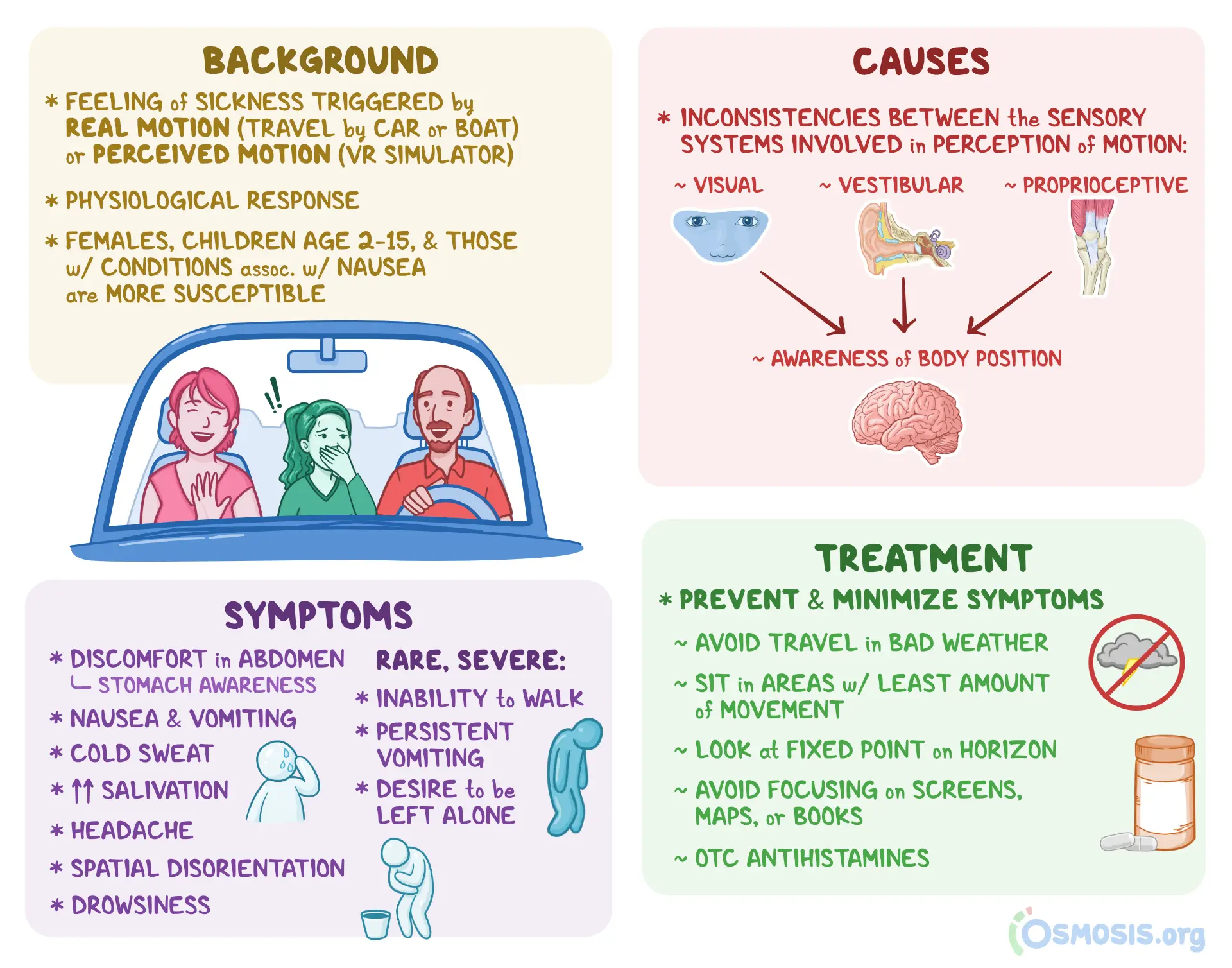
Credit: www.osmosis.org
Types Of Travel Sickness Tablets
Travel sickness tablets help reduce nausea caused by motion. Different types work in different ways. Knowing the types helps choose the right one for your needs. Some tablets block chemicals in the brain. Others calm the nerves that trigger sickness. Understanding these can make trips easier.
Antihistamines
Antihistamines block a chemical called histamine. Histamine causes symptoms like nausea and dizziness. These tablets often start working within an hour. They help prevent motion sickness before it begins. Some common antihistamines include dimenhydrinate and meclizine. They may cause drowsiness, so avoid driving after use. Antihistamines are easy to find in most pharmacies.
Anticholinergics
Anticholinergics stop signals between nerves and the brain. They reduce nausea and vomiting by calming the nervous system. Scopolamine is a well-known anticholinergic for travel sickness. It often comes as a skin patch for slow release. This type works well for long trips or cruises. Side effects can include dry mouth and blurred vision. Use anticholinergics with care and follow instructions closely.
Dosage And Safety Considerations
Travel sickness tablets can help reduce nausea. Using them safely is important. Taking the right dose ensures the medicine works well. Too much can cause problems. Knowing the correct dosage and side effects keeps you safe.
Recommended Usage
Most travel sickness tablets suggest taking one tablet 30 minutes before travel. Some tablets work for up to 8 hours. Do not take more than the package says. For children, use the dose based on age or weight. Avoid taking these tablets with alcohol. Always read the instructions on the box carefully. Consult a doctor if you have health problems or take other medicines.
Possible Side Effects
Common side effects include drowsiness, dry mouth, and dizziness. Some people feel sleepy after taking the tablet. Avoid driving or using machines if drowsy. Rarely, some may feel blurred vision or headaches. Stop using the tablet if you get a rash or swelling. Side effects usually go away after stopping the medicine. If side effects are severe, seek medical help right away.

Credit: kwellstravel.com
Alternatives For Treating Nausea
Nausea can be uncomfortable and hard to ignore. While travel sickness tablets may help some, other options exist. These alternatives can offer relief without strong medication. Simple steps and different medicines might work better for certain people. Explore these options for safer nausea treatment.
Home Remedies
Ginger is a natural way to reduce nausea. Sip ginger tea or chew ginger candy. Peppermint also soothes the stomach. Try peppermint tea or inhale peppermint oil. Drinking clear fluids helps prevent dehydration. Eat small, bland meals like crackers or toast. Avoid strong smells and spicy foods. Rest in a quiet, cool place to ease symptoms.
Other Medications
Antacids can calm stomach upset causing nausea. Over-the-counter options like bismuth subsalicylate may help. Some antihistamines work for nausea but differ from travel sickness tablets. Consult a doctor before trying new medicines. Prescription drugs might be needed for severe nausea. Always follow dosage instructions carefully to avoid side effects.
When To Seek Medical Advice
Travel sickness tablets help many people with nausea. Still, some signs need a doctor’s check. Knowing when to seek medical advice keeps you safe and well.
Persistent Symptoms
Nausea that lasts longer than a few days needs attention. If vomiting continues despite taking tablets, see a doctor. Constant dizziness or weakness can mean more serious problems. Do not wait if symptoms get worse over time.
Underlying Health Issues
Some health conditions cause nausea and need special care. Problems like infections, stomach ulcers, or inner ear issues require medical tests. Tablets for travel sickness may not work for these problems. A doctor can find the real cause and suggest the right treatment.

Credit: www.amazon.com
Frequently Asked Questions
Can Travel Sickness Tablets Relieve General Nausea?
Yes, travel sickness tablets can help reduce nausea caused by motion sickness. They contain ingredients that calm the stomach and brain signals. However, they may not work for all nausea types, so consult a healthcare provider for persistent symptoms.
Are Travel Sickness Tablets Safe For All Ages?
Most travel sickness tablets are safe for adults and children over two years. Always check the product label for age guidelines. Consult a doctor before giving these tablets to young children or if you have health conditions.
How Soon Before Travel Should I Take These Tablets?
Take travel sickness tablets 30 to 60 minutes before your journey. This timing helps prevent nausea by allowing the medication to take effect. Follow the specific instructions on the product packaging for best results.
Can I Use Travel Sickness Tablets For Nausea Unrelated To Travel?
Travel sickness tablets may help some types of nausea, but they are primarily designed for motion sickness. For nausea caused by other reasons, consult a healthcare professional for appropriate treatment.
Conclusion
Travel sickness tablets can help reduce nausea in many cases. They work by calming the stomach and blocking signals to the brain. Always read the instructions before taking any medicine. Some tablets may cause drowsiness or other side effects. Speak to a doctor if you have health problems or take other drugs.
Remember, not all nausea needs medicine. Simple steps like fresh air and resting can also help. Use travel sickness tablets wisely for safe and better relief.
