

Dubai property prices are expected to face a moderate correction between late 2025 and 2026—not a crash. Analysts predict price dips of 10–15%, mainly due to oversupply, higher interest rates, and cooling investor demand. Long-term fundamentals, however, remain strong for steady recovery.
Key Takeaways
- Expect a correction, not a crash, in Dubai property prices around 2025–2026.
- Oversupply of new units will likely pressure prices downward.
- Global interest rate trends and investor sentiment shape short-term movements.
- Luxury segments may stay resilient while mid-tier housing cools.
- Smart investors can use the dip to enter at better valuations.
- Market fundamentals—population growth and demand—remain strong long term.
If you’ve been wondering when Dubai property prices will drop, you’re not alone. Many investors and homeowners are watching the market closely, trying to time their next move. Dubai’s real estate scene moves fast, influenced by supply, global rates, and investor confidence. In this guide, you’ll learn what’s really driving prices, when experts expect a dip, and how to prepare for it. Let’s dive into what the data says about the next Dubai property cycle.
Contents
- 1 Understanding the Dubai Property Market
- 2 Key Factors That Could Trigger a Drop
- 3 What Current Signals Are Saying (2025–2026)
- 4 When Could a Drop Actually Happen? Timing Scenarios
- 5 What the Drop Might Look Like (Depth, Duration, Shape)
- 6 Implications for Buyers & Investors
- 7 Frequently Asked Questions (FAQ)
Understanding the Dubai Property Market
Unique Market Structure & Cycles
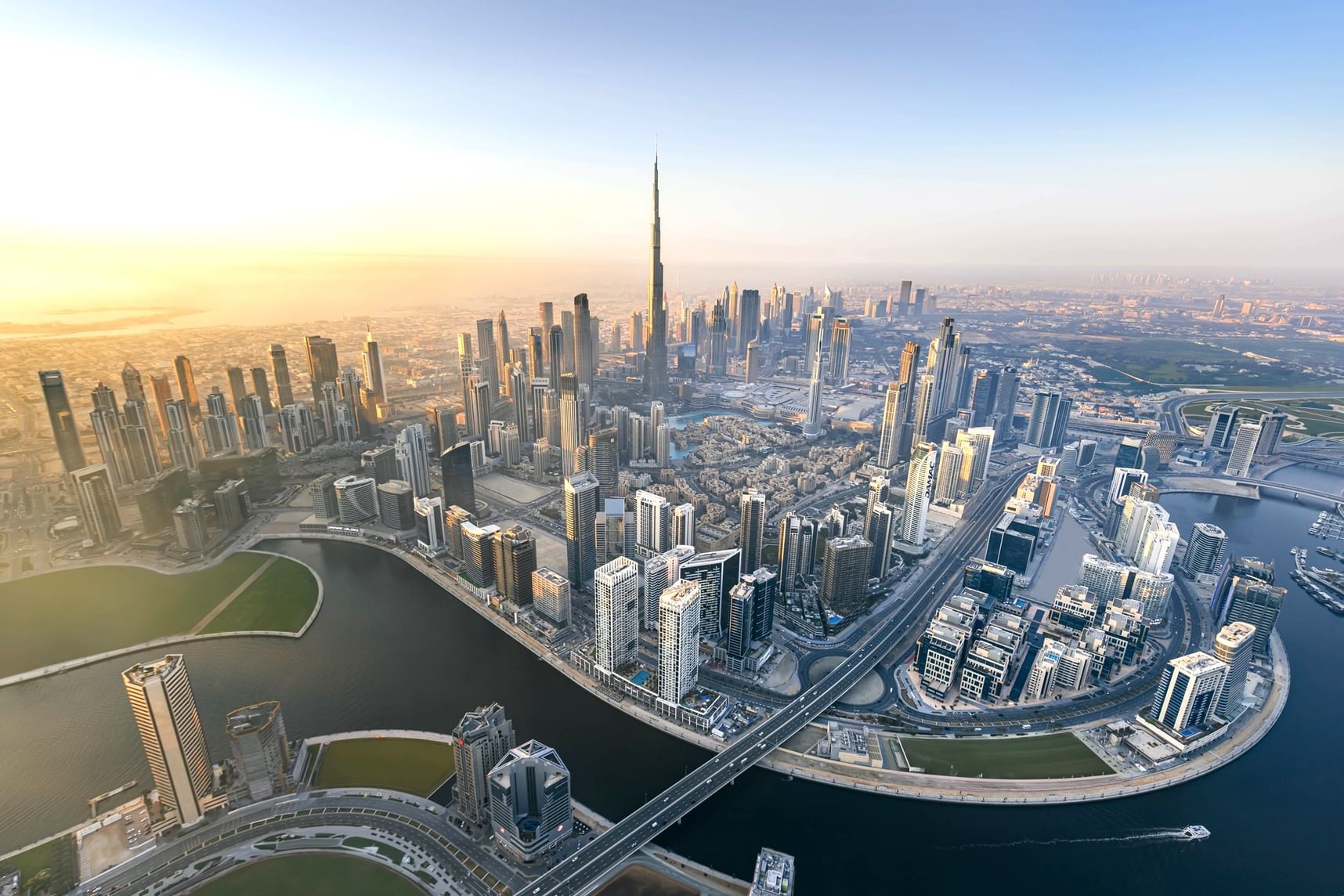
Dubai’s property market operates differently from most global cities. It’s driven by a mix of foreign investment, freehold ownership zones, and government-led master developments. Real estate in Dubai is often tied to the emirate’s broader economic strategy—boosting tourism, global business, and long-term residency. The off-plan property market, where buyers purchase before construction is complete, plays a significant role in shaping both demand and supply.
Government initiatives such as the Golden Visa program and relaxed ownership laws have historically stimulated demand from international investors. However, these same policies can also lead to sharp surges and slowdowns depending on global sentiment and liquidity.
Historical Cycles of Rise & Decline
Dubai has experienced several distinct property cycles since its real estate boom began. The 2008 global financial crisis triggered a severe downturn, with property prices falling by nearly 50%. A recovery followed from 2011 to 2014, driven by renewed investor optimism and Expo 2020 expectations. Another slowdown emerged in 2015–2019, mainly due to oversupply and slower global growth.
Following the pandemic, demand surged again as investors sought hard assets and lifestyle properties, pushing prices up over 30% by 2024. Understanding these cycles helps forecast future movements—every surge in Dubai real estate has been followed by a cooling phase, usually lasting 18–36 months.
Key Factors That Could Trigger a Drop
Supply Surge & New Unit Deliveries
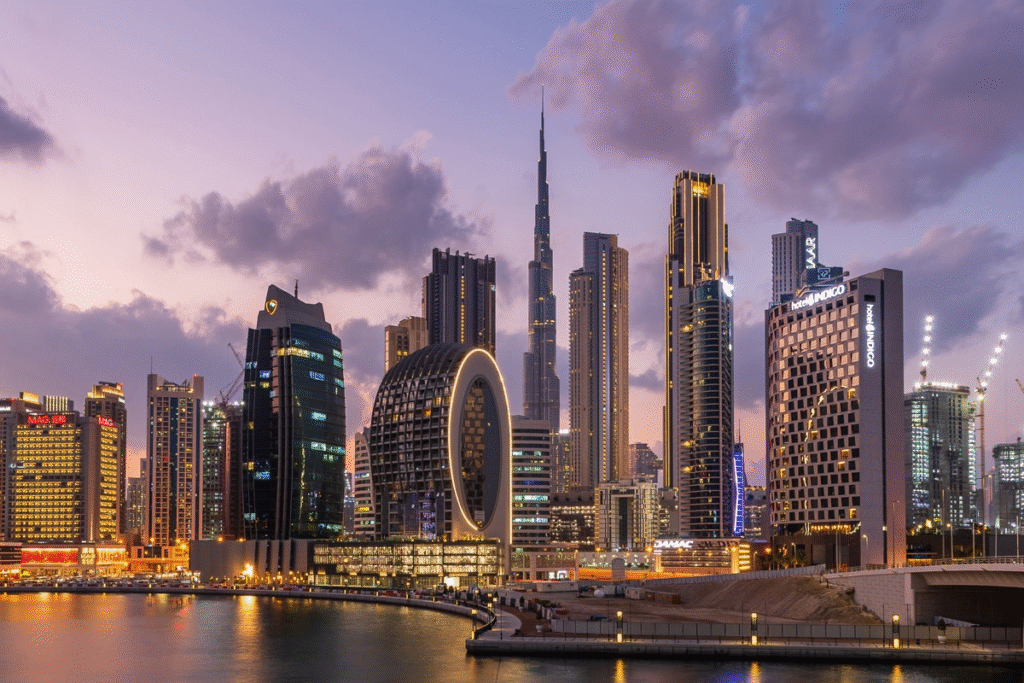
A major reason analysts expect a correction is the large pipeline of new housing units. More than 200,000 homes are expected to be delivered between 2025 and 2026, according to Reuters. This could saturate demand, especially in mid-tier and apartment segments.
Developers have been launching projects at record pace to capture investor enthusiasm, which may soon outstrip genuine end-user demand. Oversupply typically leads to price stagnation, lower rental yields, and greater competition among sellers.
Demand Slowdowns (Domestic & International Investors)
While Dubai continues to attract global buyers, recent trends suggest a cooling of speculative demand. Investors from Europe and Asia have become more cautious due to global economic uncertainty. Rising property prices and tighter financing conditions have also reduced affordability for local buyers.
A reduction in off-plan sales or longer time-to-sell indicators would confirm this trend. As investor enthusiasm slows, price corrections tend to follow.
Interest Rates, Macro & Global Financial Conditions
Dubai’s property market is highly sensitive to global interest rate movements because mortgage costs are often linked to US Federal Reserve policy. If global rates remain high, financing becomes more expensive, dampening demand for investment properties. Historical data from The National News shows that even small rate increases can impact mid-tier housing segments significantly.
Policy & Regulatory Shifts
Government policies—such as visa reforms, property registration fees, and ownership restrictions—can influence buyer confidence. While most recent reforms have supported growth, any reversal or tightening (for example, limits on speculative resales) could cause short-term drops.
Currency, Oil & Geopolitical Factors
The UAE dirham’s peg to the US dollar means global currency shifts also affect affordability. A strong dollar makes Dubai property more expensive for non-dollar investors. Additionally, oil price volatility and regional geopolitical risks can indirectly influence foreign investment inflows.
What Current Signals Are Saying (2025–2026)
Forecasts & Analyst Reports
Major credit agencies such as Fitch Ratings and Moody’s predict that Dubai property prices will likely experience a 10–15% correction between late 2025 and mid-2026. The correction is expected to be concentrated in overbuilt areas, while luxury and beachfront properties may remain stable. Analysts agree that the adjustment will likely be a “soft landing”, not a market crash, due to Dubai’s strong fiscal position and investor diversity.
According to Moody’s, the market may start cooling as early as 2025, with stabilization expected by 2027. These predictions align with early signals from property monitoring platforms, which recorded the first slight monthly decline in early 2025.
Early Market Movements & Data
Data from Property Monitor and ValuStrat indicates the first price dip since 2020 occurred in January 2025, a modest 0.5% drop month-on-month. Although minor, it signals that the market’s growth phase is nearing its end.
Sales volumes remain high, but growth is slowing. More listings are staying on the market longer, especially in the mid-income apartment sector. These are early signs of softening demand and increasing inventory pressure.
Segment-wise Behavior (Luxury vs Mass, Apartments vs Villas)
| Segment | Current Trend (2024–2025) | Expected Trend (2025–2026) | Notes |
|---|---|---|---|
| Luxury Villas | Prices stable or rising | Mild correction (0–5%) | Limited supply, strong global demand |
| Mid-Tier Apartments | Prices plateauing | Likely correction (10–15%) | High supply, slowing demand |
| Off-Plan Properties | Still selling actively | Risk of delays, possible oversupply | Developer incentives masking true demand |
| Rental Market | Strong yields | Slight moderation | May stabilize prices long-term |
Luxury markets in Palm Jumeirah and Downtown Dubai continue to show resilience due to limited new inventory, while outer communities face downward pressure.
When Could a Drop Actually Happen? Timing Scenarios
Best-Case, Base, and Worst-Case Timelines
| Scenario | Timing | Description |
|---|---|---|
| Best-Case | Early 2026 | Soft correction of 5–10%, stabilizing quickly |
| Base-Case | Late 2025–Mid 2026 | Moderate drop of 10–15% due to oversupply |
| Worst-Case | 2026–2027 | Prolonged correction exceeding 20% if global demand weakens sharply |
Leading Indicators to Watch
Investors can track a few key indicators to anticipate market shifts. Rising unsold inventory, falling absorption rates, and declining rental yields are early signs of a market turning point. Monitoring interest rate trends and global liquidity also helps predict price corrections.
According to Property Finder, the slowdown in transaction volumes often precedes price declines by three to six months. Keeping an eye on off-plan cancellations or delayed completions can offer further clues about sentiment shifts.
Geography & Submarket Timing Differences
Not all parts of Dubai move together. Central, luxury areas such as Downtown Dubai, Palm Jumeirah, and Dubai Marina tend to lag behind in downturns and recover sooner. In contrast, communities with heavy new supply like Jumeirah Village Circle (JVC), Dubailand, and Dubai South often correct first and deeper.
Submarket timing differences mean that a “market correction” may hit some areas months before others, offering opportunities for buyers to enter selectively.
What the Drop Might Look Like (Depth, Duration, Shape)
How Steep Could the Fall Be?
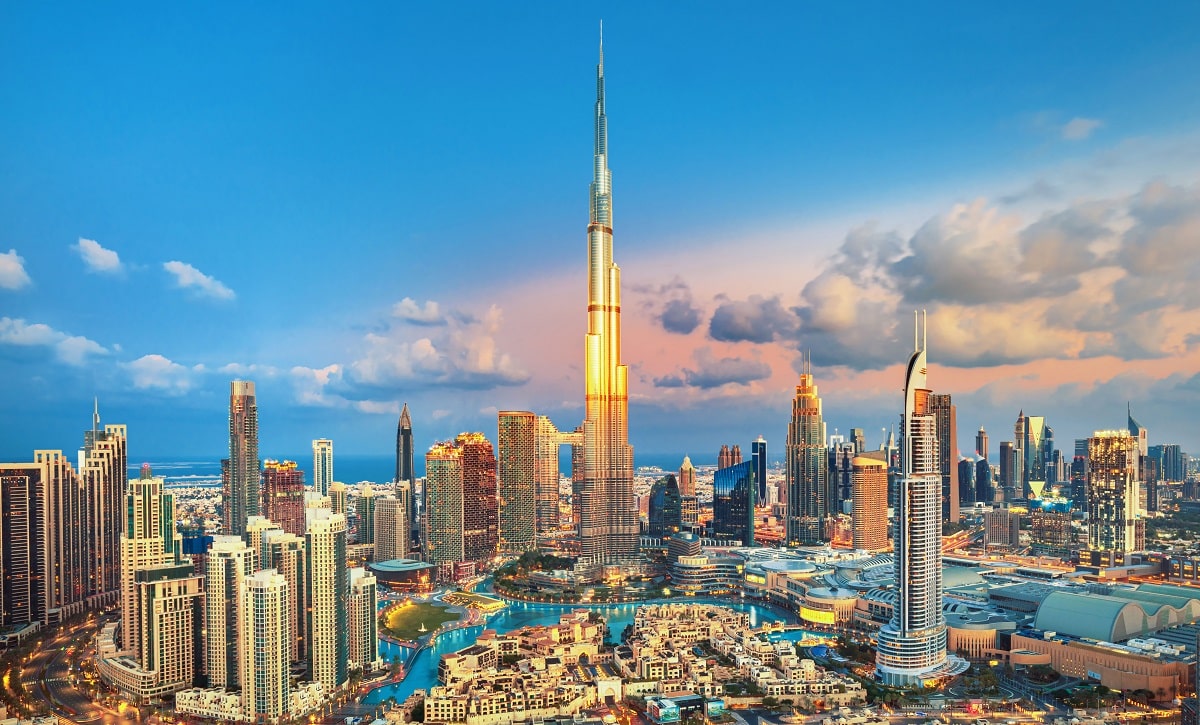
Analysts expect a moderate correction in Dubai’s property market rather than a crash. According to Fitch Ratings, the market could experience a 10–15% drop in average prices between 2025 and 2026 as new supply peaks and global monetary conditions remain tight. This adjustment will likely vary by property type and location.
Luxury villas and branded residences are expected to remain relatively stable due to limited supply and international demand, while mid-market apartments and off-plan projects face more pressure from oversupply. The price decline will be more of a flattening curve than a free fall, signaling a cyclical rebalancing rather than systemic weakness.
Duration of Correction & Recovery Path
The correction phase could last 12–24 months, depending on how quickly excess inventory is absorbed. Historically, Dubai’s property downturns have lasted between one and three years before stabilization. Based on data from Knight Frank, the post-pandemic boom phase began in mid-2020, meaning a cyclical slowdown in 2025 aligns with typical five-year patterns.
Recovery is expected to begin in 2027 as demand returns and interest rates ease globally. If developers pace new launches and investors hold for the long term, prices could regain pre-correction levels by 2028 or sooner.
Crash vs Soft Landing: Likely Scenario
Dubai’s property market is far more resilient today than in previous cycles. Stronger regulations, improved buyer transparency, and demand from diverse international investors support a soft landing scenario. A severe crash would require a major external shock such as a global recession or geopolitical disruption, both of which remain unlikely at present.
Even with moderate declines, Dubai continues to offer one of the highest rental yields globally, often ranging from 6–8%, according to CBRE. These factors create a floor beneath prices, preventing large-scale panic selling.
Implications for Buyers & Investors
How to Time Entry and Avoid Catching a Falling Knife
For potential buyers, the best strategy is to monitor leading indicators such as transaction volumes, rental yields, and developer incentives. Waiting for the first confirmed dip before entering can help secure better deals. Buyers should avoid chasing speculative off-plan launches at peak pricing and instead focus on completed or near-handover properties where value can be verified.
Investors with a long-term horizon can take advantage of short-term volatility to acquire assets in prime areas that rarely correct significantly. Patience, due diligence, and strong cash flow management are critical to avoiding mistimed purchases.
Risk Mitigation — Diversification, Holding Period, Exit Plan
Diversifying across different communities and asset types (apartments, villas, commercial) can reduce exposure to localized downturns. A minimum holding period of three to five years allows investors to ride out short-term fluctuations while benefiting from Dubai’s tax-free rental income.
Having a clear exit plan—such as targeting resale after stabilization or refinancing when rates fall—helps safeguard returns. Using fixed-rate financing can further shield investors from global interest volatility.
Which Segments May Outperform During Downturn
Luxury and waterfront properties typically show the least volatility due to global demand from high-net-worth individuals. Mid-range apartments in oversupplied areas may see sharper corrections, while family-oriented communities with strong infrastructure (e.g., Dubai Hills, Arabian Ranches) tend to maintain value better.
Investors seeking steady rental yields might pivot toward smaller units or serviced apartments that cater to Dubai’s expanding expatriate base.
Long-Term Mindset: Property as Structural Play
Dubai remains a strategic long-term market supported by population growth, tourism, and pro-investment policies. The correction phase should be viewed as an opportunity to enter at more sustainable levels, not a signal of decline. Historical data shows that each downturn has paved the way for stronger rebounds fueled by economic diversification and regulatory maturity.
For disciplined investors, the coming years may represent a rare window to build positions in one of the world’s fastest-evolving real estate hubs.
Frequently Asked Questions (FAQ)
Will Dubai property ever crash?
A full crash is unlikely under current conditions. Experts expect a gradual correction rather than a collapse, supported by continued population growth and strong investor confidence.
Which neighborhoods are safer during a downturn?
Prime areas like Downtown Dubai, Dubai Marina, and Palm Jumeirah typically retain value due to limited new supply and high global demand.
When did past corrections happen and how severe were they?
The major declines occurred in 2008 and 2015, with price drops of 40–50% and 15–20% respectively. These were followed by strong recoveries driven by new visa laws and global demand surges.
Should I buy now or wait until prices drop?
If you’re buying for long-term use or income, current levels remain viable. If your goal is short-term profit, waiting until mid-2025 could offer better entry prices.
What indicators show that a correction is starting?
Rising unsold inventory, slower transaction growth, and lower rental yields are early warning signs. Monitoring quarterly data from DLD and CBRE can help confirm market shifts.
These insights help readers make informed decisions, balancing opportunity and risk in Dubai’s dynamic real estate cycle.
