
UAE visa amnesty is a temporary government program that allows individuals with expired or overstayed visas to regularize their status without fines or deportation. It offers a legal pathway to exit the country or renew residency, helping thousands avoid penalties and start fresh.
Contents
- 1 Key Takeaways
- 2 Quick Answers to Common Questions
- 3 📑 Table of Contents
- 4 What Is UAE Visa Amnesty and Why Does It Matter?
- 5 Who Qualifies for UAE Visa Amnesty?
- 6 How Does the UAE Visa Amnesty Process Work?
- 7 Benefits of Using UAE Visa Amnesty
- 8 Real-Life Examples of How Amnesty Helps
- 9 Common Mistakes to Avoid During Amnesty
- 10 How to Stay Informed About Future Amnesty Programs
- 11 Conclusion: Take Control of Your UAE Status
- 12 Frequently Asked Questions
Key Takeaways
- What is UAE visa amnesty? A government-granted grace period for visa overstayers to leave or regularize their status without fines or bans.
- Who qualifies? Individuals with expired residency, visit, or tourist visas, including dependents and workers, may be eligible.
- No fines or deportation: During the amnesty period, overstayers are exempt from overstay penalties and can exit or renew legally.
- Apply online or at service centers: Use official UAE government portals like ICA or GDRFA to complete the process safely.
- Limited time only: Amnesty programs are temporary—always check official announcements for start and end dates.
- Exit or renew options: You can either leave the UAE or apply for a new visa depending on your situation.
- Avoid future issues: Use amnesty as a chance to get your documents in order and stay compliant moving forward.
Quick Answers to Common Questions
What is UAE visa amnesty?
UAE visa amnesty is a temporary government program that allows individuals with expired or overstayed visas to leave the country or renew their residency without paying fines or facing deportation.
Who can apply for visa amnesty?
Most people with expired residency, tourist, or visit visas qualify, including dependents and workers. Exceptions include those with criminal records or prior deportations.
Do I have to pay overstay fines during amnesty?
No. During the amnesty period, overstay fines are waived. You only pay a small processing fee, if any.
Can I stay in the UAE after using amnesty?
Yes, you can apply for a new visa, such as a tourist, freelance, or work visa, depending on your eligibility and plans.
How long does the amnesty period last?
Amnesty programs typically last 60 to 90 days, but the duration varies. Always check official announcements for exact dates.
📑 Table of Contents
- What Is UAE Visa Amnesty and Why Does It Matter?
- Who Qualifies for UAE Visa Amnesty?
- How Does the UAE Visa Amnesty Process Work?
- Benefits of Using UAE Visa Amnesty
- Real-Life Examples of How Amnesty Helps
- Common Mistakes to Avoid During Amnesty
- How to Stay Informed About Future Amnesty Programs
- Conclusion: Take Control of Your UAE Status
What Is UAE Visa Amnesty and Why Does It Matter?
If you’ve ever lived, worked, or visited the UAE, you know how strict the country is about visas and residency rules. Even a few days past your visa expiry can lead to daily fines, travel bans, or even deportation. That’s why the UAE government occasionally introduces a special program called visa amnesty—a lifeline for thousands of people who’ve overstayed their visas.
Think of visa amnesty as a second chance. It’s a temporary window where the government allows individuals with expired or overstayed visas to either leave the country or renew their residency—without facing the usual penalties. No fines, no black marks, and no immediate deportation. It’s a compassionate move by the authorities to help people get back on the right side of the law.
But here’s the catch: amnesty isn’t permanent. It only lasts for a few weeks or months, and it doesn’t happen every year. When it does, it’s a big deal. Thousands of people rush to take advantage, hoping to clear their status and avoid future problems. Whether you’re a worker whose visa lapsed, a tourist who overstayed, or a dependent whose sponsor’s visa expired, this could be your chance to fix things—without the stress of fines or bans.
Who Qualifies for UAE Visa Amnesty?

Visual guide about What Is UAE Visa Amnesty and How It Affects You
Image source: dubaieverything.com
Not everyone automatically qualifies for visa amnesty, but the good news is that the program is usually broad and inclusive. The UAE government typically opens amnesty to a wide range of people, including:
- Residents with expired work or residency visas
- Tourists or visitors who overstayed their visa
- Dependents (spouses or children) whose sponsor’s visa has expired
- People with cancelled or absconded work permits
- Individuals who entered the UAE illegally but wish to leave legally
For example, imagine you’re a software engineer whose company closed down, and your work visa was cancelled. You’ve been living in Dubai for months without a valid residency. During an amnesty period, you could apply to either exit the country or switch to a new visa—like a freelance or tourist visa—without paying overstay fines.
Another common case: a tourist from India who came to visit family but stayed longer than the 30-day visa allowed. Instead of facing a daily fine of AED 100 or more, they can use amnesty to leave the UAE legally and avoid a travel ban.
Special Cases and Exceptions
While most overstayers qualify, there are a few exceptions. People with serious criminal records, those involved in fraud or forgery, or individuals who have already been deported in the past may not be eligible. The government reviews each case, but generally, the focus is on helping honest people who simply fell behind on paperwork.
Also, note that amnesty usually doesn’t apply to people who entered the UAE illegally through unofficial means. However, in some cases, even these individuals may be allowed to exit without punishment—especially if they come forward voluntarily.
How Does the UAE Visa Amnesty Process Work?
Visual guide about What Is UAE Visa Amnesty and How It Affects You
Image source: arabianbusiness.com
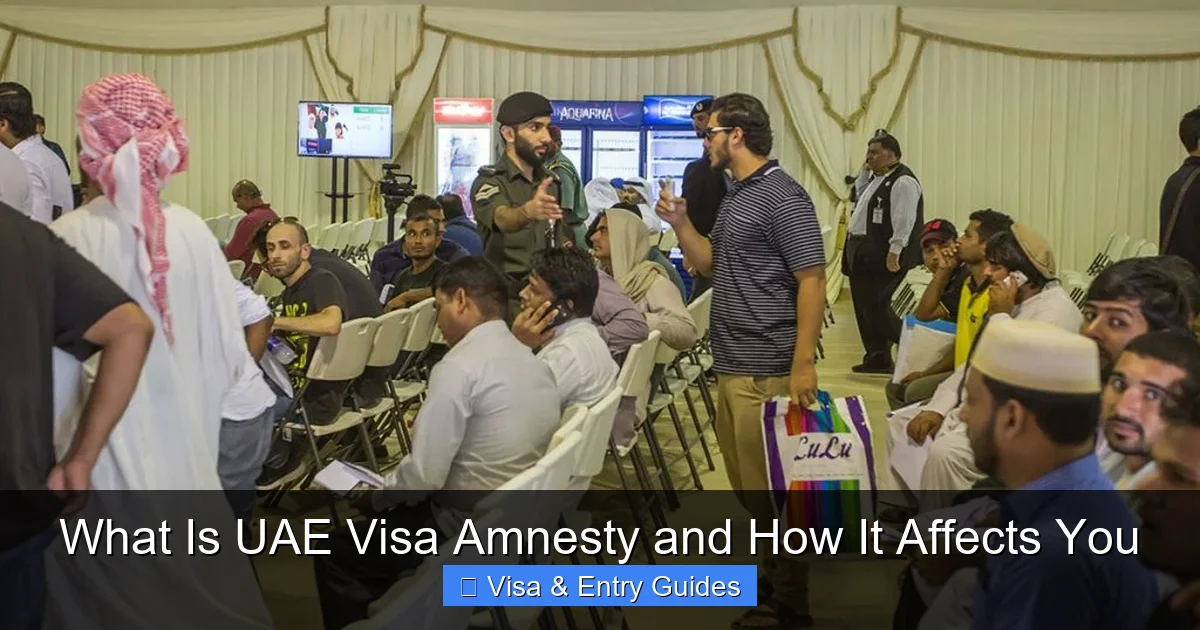
The process is designed to be simple and accessible, especially during an amnesty period. Here’s a step-by-step breakdown of what typically happens:
Step 1: Check Eligibility and Dates
First, confirm that an amnesty is active and that you qualify. The UAE government announces amnesty programs through official channels like the Federal Authority for Identity, Citizenship, Customs & Port Security (ICA), the General Directorate of Residency and Foreigners Affairs (GDRFA), and major news outlets.
For example, during the 2023 amnesty, the program ran from August 1 to October 31. It was widely advertised, and people were encouraged to act quickly.
Step 2: Choose Your Option—Exit or Renew
Once you know you’re eligible, you have two main choices:
Option A: Exit the UAE
You can leave the country without paying overstay fines or facing a travel ban. This is ideal if you don’t plan to return soon or if you’re returning home.
Option B: Regularize Your Status
You can apply for a new visa, such as a tourist visa, freelance visa, or even a new work visa if you find a sponsor. This allows you to stay legally.
For instance, a Filipino nurse whose work visa expired might use amnesty to switch to a tourist visa while she looks for a new job. Or a student whose dependent visa lapsed could apply for a new residency through a university.
Step 3: Apply Online or Visit a Service Center
Most applications are done online through the ICA Smart Services portal or the GDRFA app. You’ll need:
- A valid passport
- Current visa details (even if expired)
- Proof of identity (Emirates ID if available)
- Passport-sized photo
- Payment for any required fees (though fines are waived during amnesty)
If you’re applying to exit, you’ll receive an exit permit. If you’re applying to renew, you’ll get a temporary visa or approval to proceed with a new application.
Step 4: Complete the Process
Once approved, follow the instructions. If exiting, book your flight and leave before the deadline. If staying, complete your visa process within the given timeframe.
Tip: Start early. During amnesty periods, government websites can get overloaded, and appointment slots fill up fast. Don’t wait until the last week.
Benefits of Using UAE Visa Amnesty

Visual guide about What Is UAE Visa Amnesty and How It Affects You
Image source: cdn.emiratitimes.com
Taking advantage of visa amnesty isn’t just about avoiding fines—it’s about protecting your future in the UAE. Here are the key benefits:
No Overstay Fines
Normally, overstaying a visa in the UAE costs AED 100 per day after the grace period (usually 30 days). For someone who overstays for six months, that’s AED 18,000 in fines—money you won’t have to pay during amnesty.
No Travel Ban
Overstaying can result in a 1-year or even lifetime ban from re-entering the UAE. Amnesty clears this risk, allowing you to return legally in the future.
Legal Pathway to Stay
If you want to remain in the UAE, amnesty gives you a chance to switch visas or find a new sponsor without being flagged as an overstayer.
Peace of Mind
Living with an expired visa is stressful. You can’t travel, renew documents, or access services. Amnesty removes that burden and lets you move forward with confidence.
Protect Your Reputation
A clean immigration record helps when applying for jobs, visas, or even citizenship in the future. Amnesty helps you maintain a positive history.
Real-Life Examples of How Amnesty Helps
Let’s look at a few real-world scenarios to see how visa amnesty makes a difference.
Case 1: The Overstayed Tourist
Maria, a Spanish national, came to Dubai for a two-week vacation. Her tourist visa allowed 30 days, but she extended her stay to visit family in Abu Dhabi. She lost track of time and stayed 45 days. When she tried to leave, she was hit with a AED 1,500 fine.
But during the 2023 amnesty, Maria applied online, paid a small processing fee, and exited the UAE without any penalty. She can now return anytime with a clean record.
Case 2: The Jobless Worker
Ahmed, an Indian engineer, lost his job when his company downsized. His work visa was cancelled, but he couldn’t find a new sponsor right away. He overstayed for three months, accruing AED 9,000 in potential fines.
During amnesty, he applied for a freelance visa through the Dubai Development Authority (DDA). He’s now working legally as a consultant and plans to sponsor his family soon.
Case 3: The Dependent Child
Sara, a 16-year-old from Egypt, was in the UAE on a dependent visa under her father’s sponsorship. Her father’s company closed, and his visa was cancelled. Sara’s visa became invalid, but she stayed to finish school.
With amnesty, her mother applied to extend Sara’s stay on a student visa. She’s now enrolled in a local school and has legal residency.
Common Mistakes to Avoid During Amnesty
Even with a helpful program, people make errors that can cost them their chance. Here’s what to avoid:
Waiting Until the Last Minute
Amnesty periods are short—often 60 to 90 days. Don’t assume you have time. Start your application as soon as it’s announced.
Using Fake or Third-Party Services
Only use official government websites like icp.gov.ae or gdrfad.gov.ae. Avoid agents who promise “guaranteed approval” for extra fees—many are scams.
Providing Incorrect Information
Double-check your passport number, visa details, and personal information. A small mistake can delay or reject your application.
Assuming All Visas Are Covered
Some special visas or entry permits may not qualify. Always check the official guidelines.
Not Planning Your Next Step
If you’re staying, have a plan. Do you have a job offer? A sponsor? A freelance license? Don’t regularize your status only to become illegal again.
How to Stay Informed About Future Amnesty Programs
Since amnesty isn’t regular, staying informed is key. Here’s how:
- Follow the official ICA and GDRFA social media accounts (Twitter, Instagram, Facebook)
- Subscribe to UAE government newsletters
- Check trusted news sources like Gulf News, The National, and Khaleej Times
- Ask your employer or sponsor to alert you
- Use the ICA app for real-time updates
When an amnesty is announced, act fast. These programs are designed to help, but they won’t wait.
Conclusion: Take Control of Your UAE Status
Understanding what is UAE visa amnesty could save you thousands of dirhams, protect your ability to return, and give you peace of mind. It’s a rare opportunity to correct past mistakes without punishment.
Whether you’re a worker, tourist, student, or dependent, this program is designed with real people in mind. It recognizes that life happens—jobs end, plans change, and paperwork gets delayed. Amnesty is the UAE’s way of saying, “We understand. Let’s fix this together.”
So if you’ve ever overstayed a visa or know someone who has, keep an eye out for the next amnesty announcement. When it comes, don’t hesitate. Apply early, follow the steps, and take control of your future in the UAE.
Frequently Asked Questions
Is UAE visa amnesty available every year?
No, visa amnesty is not annual. It’s announced by the government based on policy decisions and usually occurs every few years. Always monitor official sources for updates.
Can I apply for amnesty if I entered the UAE illegally?
In most cases, no. Amnesty typically covers legal entrants with expired visas. However, some programs may allow illegal entrants to exit without punishment if they come forward voluntarily.
What happens if I miss the amnesty deadline?
If you miss the deadline, you’ll be subject to overstay fines, possible travel bans, and deportation. It’s crucial to act during the announced period.
Can I apply for amnesty for my family members?
Yes, you can apply on behalf of dependents like spouses or children, provided they meet the eligibility criteria and you have the required documents.
Do I need a sponsor to apply for amnesty?
Not necessarily. While some visa renewals require a sponsor, the amnesty application itself can often be done independently, especially for exit permits.
Is there a fee to apply for visa amnesty?
There may be a small processing fee (usually under AED 200), but overstay fines are waived. Avoid third-party agents who charge high fees.
